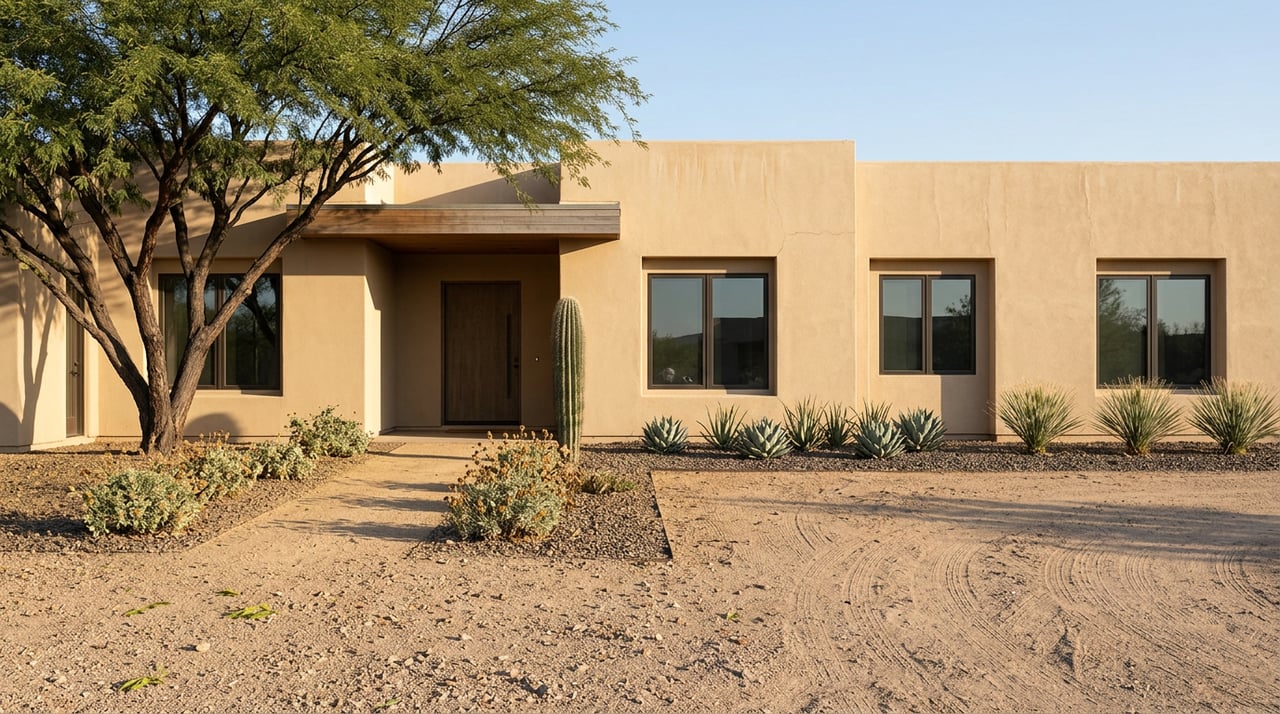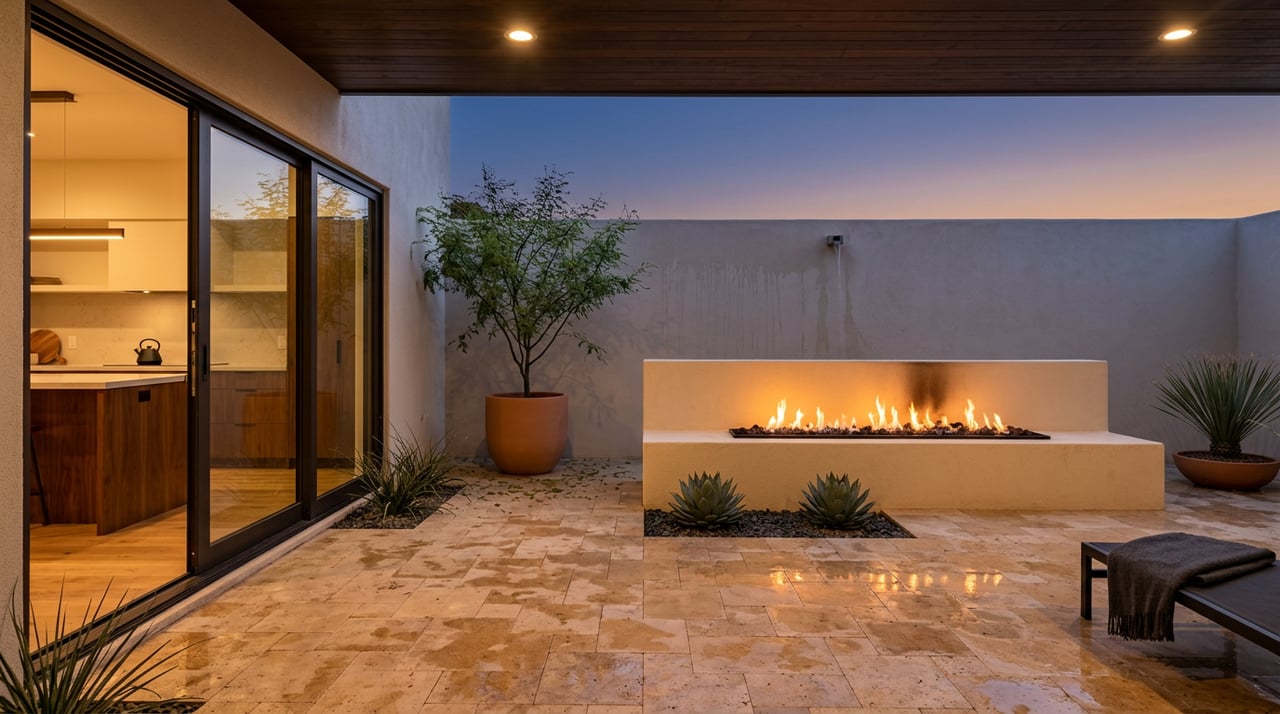
Picture two homes in Rancho Sahuarita, both listed at $370,000, both three bedrooms, both built within the last five years. A buyer comparing them on a portal sees identical numbers and assumes the monthly cost of owning either one will be roughly the same. Then the closing documents arrive, and one buyer discovers a Community Facilities District assessment showing up as its own line on the property tax bill, on top of HOA dues that already looked steep. The other buyer's paperwork shows something different entirely. Same price. Different bill, every single month, for years.
That gap is not a mistake or a fluke. It is baked into how Rancho Sahuarita was built, and it is the piece of the puzzle a median price on a listing site will never show you.
Two Different Charges Hiding Under One Sale Price
Most buyers walk in expecting one extra cost on top of the mortgage: the HOA. In Rancho Sahuarita, there are usually two, and they are not the same thing wearing different names.
The HOA, officially the Rancho Sahuarita Village Program, funds the amenities you can see and touch: the pools, the fitness center, the trails, the parks, the landscaping along the medians. A Community Facilities District, or CFD, is something else. It is a separate unit of local government, created under Arizona law, with its own board and its own authority to issue bonds and levy a property tax. The Town of Sahuarita's own FAQ page is direct about this distinction: the town itself charges no property tax and no impact fees, but certain sections of Rancho Sahuarita and Quail Creek sit inside a CFD boundary, and those properties carry an additional assessment collected right alongside standard property taxes.
So the HOA dues pay for lifestyle. The CFD assessment pays down bonds that financed roads, drainage, sewer lines, and other infrastructure before the town's tax base could otherwise support it. Two different bills, two different purposes, both attached to the same house.
Why Sahuarita Leans On CFDs In The First Place
Sahuarita levies no town-level property tax at all, a detail confirmed on the town's own tax information page. That policy choice keeps the town's direct tax burden low, but it also means large infrastructure projects inside master-planned communities need another funding source. The CFD structure fills that gap. When the Rancho Sahuarita district was formed in 2014, the town's plan was to let a special district issue bonds and repay them through a dedicated property tax assessment on homes inside the boundary, rather than asking the developer to front all the infrastructure cost or spreading it across every taxpayer in town. Green Valley News covered the mechanics when the district was proposed, noting the original rate structure combined debt service and operations and maintenance into one combined levy.
That district is still active today. Town records show tentative and final FY26 budget resolutions on file for the Rancho Sahuarita CFD, which means this isn't a legacy fee winding down. It is a live, currently governed piece of the tax bill for homes inside the boundary.
Quail Creek runs its own separate CFD, formed back in 2005, and its structure is documented plainly on the town's Quail Creek CFD page: property owners inside that district pay a levy of up to $0.30 per $100 of net assessed value specifically earmarked for operations and maintenance of district-owned assets.
| District | Formed | What It Funds | Structure |
|---|---|---|---|
| Rancho Sahuarita CFD | 2014 | Roads, drainage, sewer, landscaping for new development | Debt service plus O&M, still under active FY26 budget |
| Quail Creek CFD | 2005 | Operations and maintenance of district infrastructure | Up to $0.30 per $100 net assessed value for O&M |
Two districts, two different founding purposes, two different rate structures. And that is before accounting for the fact that not every home in either master plan even sits inside a CFD boundary in the first place.
Why The Number Isn't The Same Two Streets Over
This is the part that surprises people who have already done their homework on price. Town of Sahuarita planning records show new residential build permits issued every month across 2024, 2025, and 2026 in villages including Sonora at Rancho Sahuarita, Presidios at Rancho Sahuarita, Entrada del Toro, Entrada del Pueblo, Madera Highlands, and Quail Creek. Each of those villages was platted at a different point in the CFD's life, some inside the original boundary and some outside it, some carrying additional sub-association assessments for features like gated access, some not.
That is why a straightforward median price does so little of the real work. As of July 2026, Sahuarita's median sale price sat at $371,000, up from $335,000 a year earlier in August 2025, a $36,000 climb in twelve months. That number tells you where the market has been heading. It tells you nothing about which of those dollars are going toward principal and interest versus which are locked into a fixed CFD debt payment that does not move whether the home appreciates or not.
Right now, builders are actively selling across several of these villages at once, which means a buyer comparing new construction options is really comparing different fee structures dressed up as similar floor plans. Lennar is building at Entrada del Pueblo and Entrada del Toro, with the Jerome plan starting in the high $280s. D.R. Horton has its Mariposa, Kingston, and Plan 1262/1383 floor plans active at Entrada del Toro as well. Robson Communities continues selling into the 55-plus Quail Creek community, where the Oasis Home Series runs from roughly 1,251 to 2,492 square feet, paired with incentives up to $50,000, and where residents now have a full year of access to the 36,000-square-foot Canyon Club, which marked its first anniversary in April 2026.
Every one of those builders is selling inside a master plan with an active CFD. None of them are selling at the same combined HOA-plus-CFD carrying cost.
Before you fall for a floor plan, ask your agent to pull the actual HOA and CFD disclosure packet for that specific lot, not a generic community brochure. The village name on the plat map determines the assessment, not the builder's marketing copy.
The Other Line Items Waiting At The Closing Table
The CFD assessment is the big, recurring one, but it is not the only fee that shows up specifically because a home sits inside Rancho Sahuarita rather than a standalone subdivision. HOA transfer fees are common at resale, and they are billed separately from the monthly dues themselves. Public MLS records for homes in the community have shown transfer fees running into the hundreds of dollars, charged at closing on top of whatever the monthly assessment happens to be.
Some sections of the community also carry a one-time capital contribution or community enhancement fee at resale, distinct from the standard transfer fee and paid in addition to it. Whether that falls to the buyer or the seller is often negotiable and should be spelled out in the purchase contract rather than assumed from habit.
Here is what to request before you get too attached to any specific address:
- The current HOA transfer fee and resale disclosure fee for that exact village, not a community-wide average
- A CFD assessment lookup for the parcel, which the Pima County Treasurer's office can provide once you have the parcel's state code
- The HOA's most recent budget and reserve study, so you can see what portion of dues is funding reserves versus day-to-day operations
- The CC&Rs for that specific sub-association, since gated sections and certain villages carry add-on assessments beyond the base HOA rate
- For new construction, the builder's combined HOA-plus-CFD disclosure packet, signed and dated, not a verbal estimate from a sales office
Why This Matters More As Prices Climb
A CFD's debt service portion is fixed by bond terms, not by market conditions. As home prices rise, that fixed dollar amount becomes a smaller share of a bigger number, which is part of why the added burden hasn't historically discouraged buyers from a well-amenitized master plan. When Quail Creek's CFD was still new, the community's own leadership noted the higher tax load had no measurable effect on sales there, since buyers were weighing it against the amenities the district's bonds had funded. That tradeoff logic hasn't disappeared. It has just gotten less visible as prices climb and monthly payments get bundled into one number on a pre-approval letter.
The practical takeaway isn't that CFDs are a red flag. It's that the assessment is a real, ongoing cost that varies by exactly where a home sits, and no median price search will surface it for you. Only the disclosure packet will.
A Few Questions Worth Settling Before You Sign
Does every home in Rancho Sahuarita pay a CFD assessment? No. Only parcels inside the district's mapped boundary carry the charge. Older, previously built sections of the community may fall outside it entirely, while newer villages built after the district's formation typically fall inside.
Is the CFD assessment the same as a regular property tax? It's collected the same way, alongside standard property taxes, but it funds a specific district's bonds and operations rather than general county or school district services.
Will the CFD assessment eventually go away? Debt-financed portions of a CFD levy are tied to bond repayment schedules, which can run for years. The operations and maintenance portion, like Quail Creek's up to $0.30 per $100 rate, is ongoing as long as the district exists.
If you're weighing a move into Rancho Sahuarita, Quail Creek, or any of the villages still under construction south of Tucson, the price tag is only the opening question. Let's talk through the actual disclosure packet for the specific lot you're considering, so you know exactly what you're signing up for every month, not just on closing day. Katie Gibbons is ready to help you read the fine print before it becomes your bill. Let's Connect.